
Global
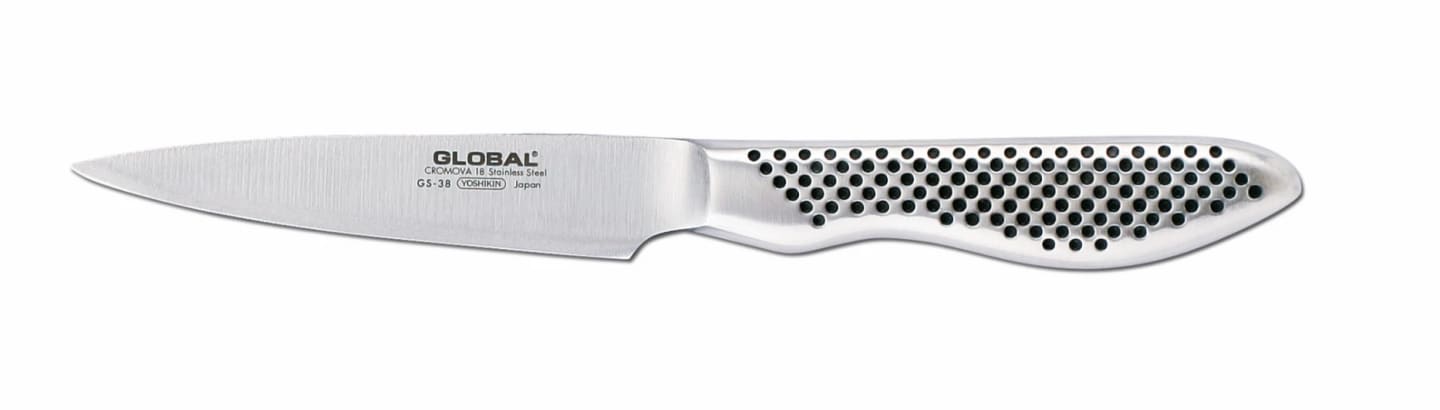
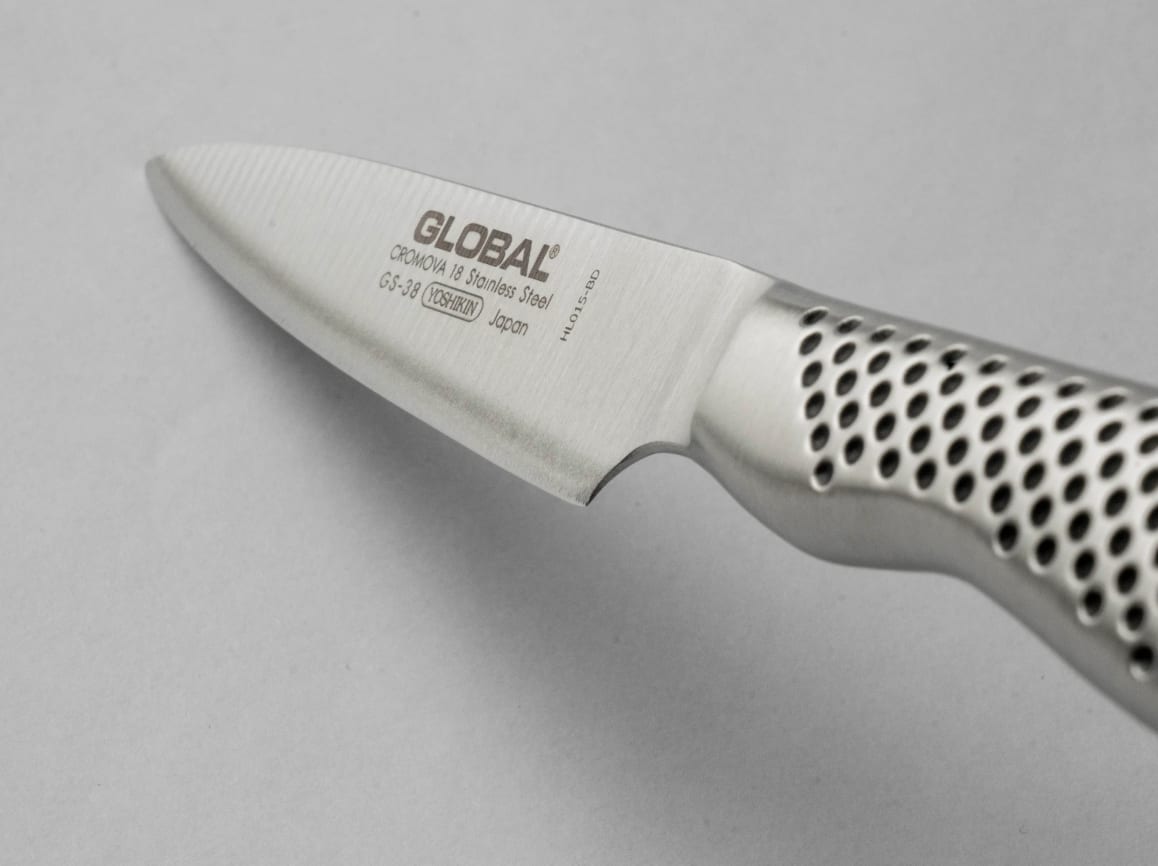
Paring knife from Global, 9 cm.
Item no. CA275130410
The paring knife is the smallest knife in the kitchen. The knife is particularly suitable for peeling fruit and vegetables as well as other tasks requiring precision. You can use it either in the air, for example when peeling onions, or against a cutting board when cutting smaller ingredients. Most chefs agree that the knife is the most important tool in the kitchen. In the same way that a dull knife can reduce the desire to cook, a sharp knife can inspire great feats in the kitchen. A brand-new Global knife is extremely sharp—just as sharp as you want a kitchen knife to be. However, for your knife to continue performing at the same level, there are a few things you should consider. Cleaning Do not leave your knife unwashed. Hand wash the knife with water and a little dish soap and dry it with a kitchen towel immediately after use. Never wash a Global knife in a dishwasher – it is bad for both the knife and the machine. The dishwasher baskets can be damaged and the detergent can cause corrosive damage to the knife. Surface Use a surface that is gentle on the knife, preferably Global's cutting boards made of wood, plastic, or sugarcane. It is important that the surface is soft. If the cutting board is harder than the knife, the knife will be damaged. Wear and Tear Try not to wear down the knife edge unnecessarily. Use the back of the knife when scraping off the cutting board so the edge doesn't become dull. Also, avoid cutting frozen food or hard bones. Storage Global knives should not lie loose in a cutlery drawer. The best way is to store them in a knife case, knife block, or on a magnetic strip. If using a magnetic strip, place the knife on the strip spine-first to avoid damage. Maintenance To maintain a sharp edge, it is necessary to sharpen the knife regularly. Maintain your Global knife by drawing it over a ceramic honing rod or using a water sharpener once a month. When the knife no longer becomes sharp enough with a rod or water sharpener, it needs professional sharpening. You can choose to do this yourself with a whetstone or take it to an experienced professional. Remember that Japanese knives should maintain an angle of 10–15 degrees.
SEK 695
SEK 868.75 incl. VAT
Prices are shown excluding VAT
In stock


Description
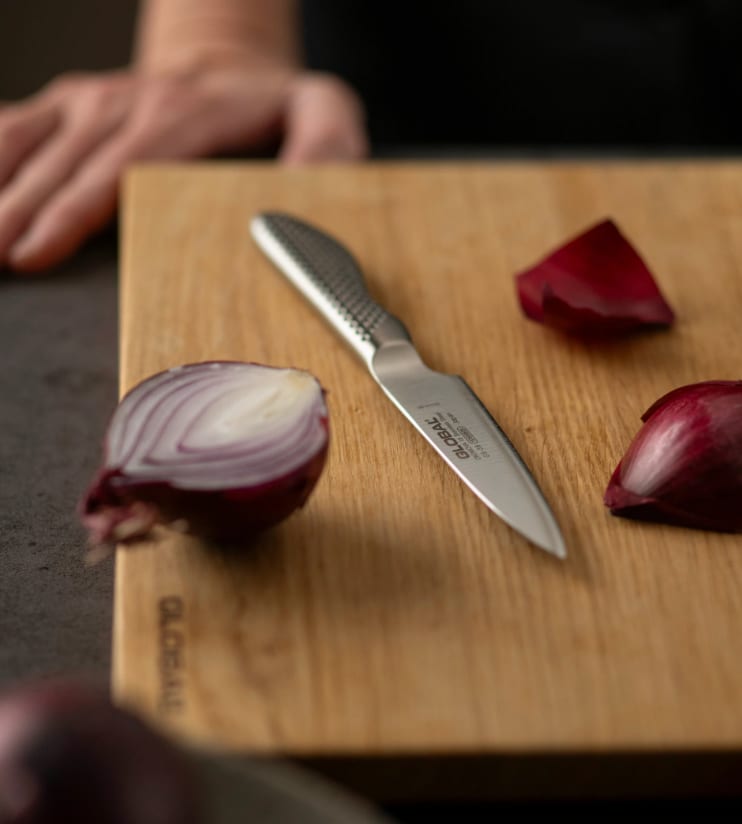
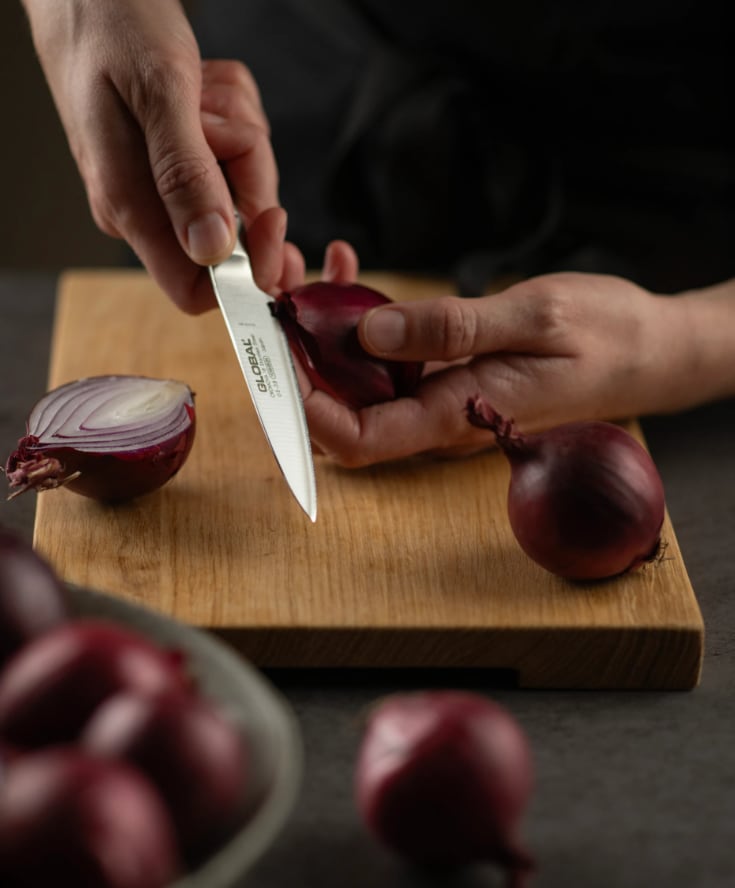
The paring knife is the smallest knife in the kitchen. The knife is particularly suitable for peeling fruit and vegetables as well as other tasks requiring precision. You can use it either in the air, for example when peeling onions, or against a cutting board when cutting smaller ingredients.
Most chefs agree that the knife is the most important tool in the kitchen. In the same way that a dull knife can reduce the desire to cook, a sharp knife can inspire great feats in the kitchen. A brand-new Global knife is extremely sharp—just as sharp as you want a kitchen knife to be. However, for your knife to continue performing at the same level, there are a few things you should consider.
Cleaning Do not leave your knife unwashed. Hand wash the knife with water and a little dish soap and dry it with a kitchen towel immediately after use. Never wash a Global knife in a dishwasher – it is bad for both the knife and the machine. The dishwasher baskets can be damaged and the detergent can cause corrosive damage to the knife.
Surface Use a surface that is gentle on the knife, preferably Global's cutting boards made of wood, plastic, or sugarcane. It is important that the surface is soft. If the cutting board is harder than the knife, the knife will be damaged.
Wear and Tear Try not to wear down the knife edge unnecessarily. Use the back of the knife when scraping off the cutting board so the edge doesn't become dull. Also, avoid cutting frozen food or hard bones.
Storage Global knives should not lie loose in a cutlery drawer. The best way is to store them in a knife case, knife block, or on a magnetic strip. If using a magnetic strip, place the knife on the strip spine-first to avoid damage.
Maintenance To maintain a sharp edge, it is necessary to sharpen the knife regularly. Maintain your Global knife by drawing it over a ceramic honing rod or using a water sharpener once a month. When the knife no longer becomes sharp enough with a rod or water sharpener, it needs professional sharpening. You can choose to do this yourself with a whetstone or take it to an experienced professional. Remember that Japanese knives should maintain an angle of 10–15 degrees.
Request a quote
Tell us what you need and we will get back to you with a quote.